
But here is the real challenge: what do you do when your guest room is also your home office, your yoga corner, and your dog’s daytime nap zone? Space is tight, especially in cities. You cannot dedicate a whole room to an animal that just wants to be wherever you are. That is where a multifunctional piece like a sofa bed becomes a lifesaver. I have a compact sofa bed in my study that doubles as a landing pad for the dog during the day. When my parents visit, I flip it open in under sixty seconds. The trick is choosing a model with a decent foam mattress that is at least twelve centimeters thick, not the flimsy, saggy pad that comes with budget options. A better mattress means your guests sleep well, and the dog gets a supportive surface for her joints. No one wants to wake up on a metal
The concept sounds more complicated than it is. A local carpenter and a mural artist spent two days building a slatted frame into the structure of the painting itself. When the bed is folded up, you see a three-panel abstract composition in muted teal and ochre, the kind of art that looks intentional rather than hidden. The joinery is invisible from three feet away. But when I pull the bottom edge downward, a click-clack mechanism releases the frame and the entire unit swings down smoothly. The painting splits apart along pre-designed seams, and within five seconds I have a full-size bed with storage underneath. The foam mattress is 14 cm thick and lives inside the lowered section, which also holds two pillows and a spare blan
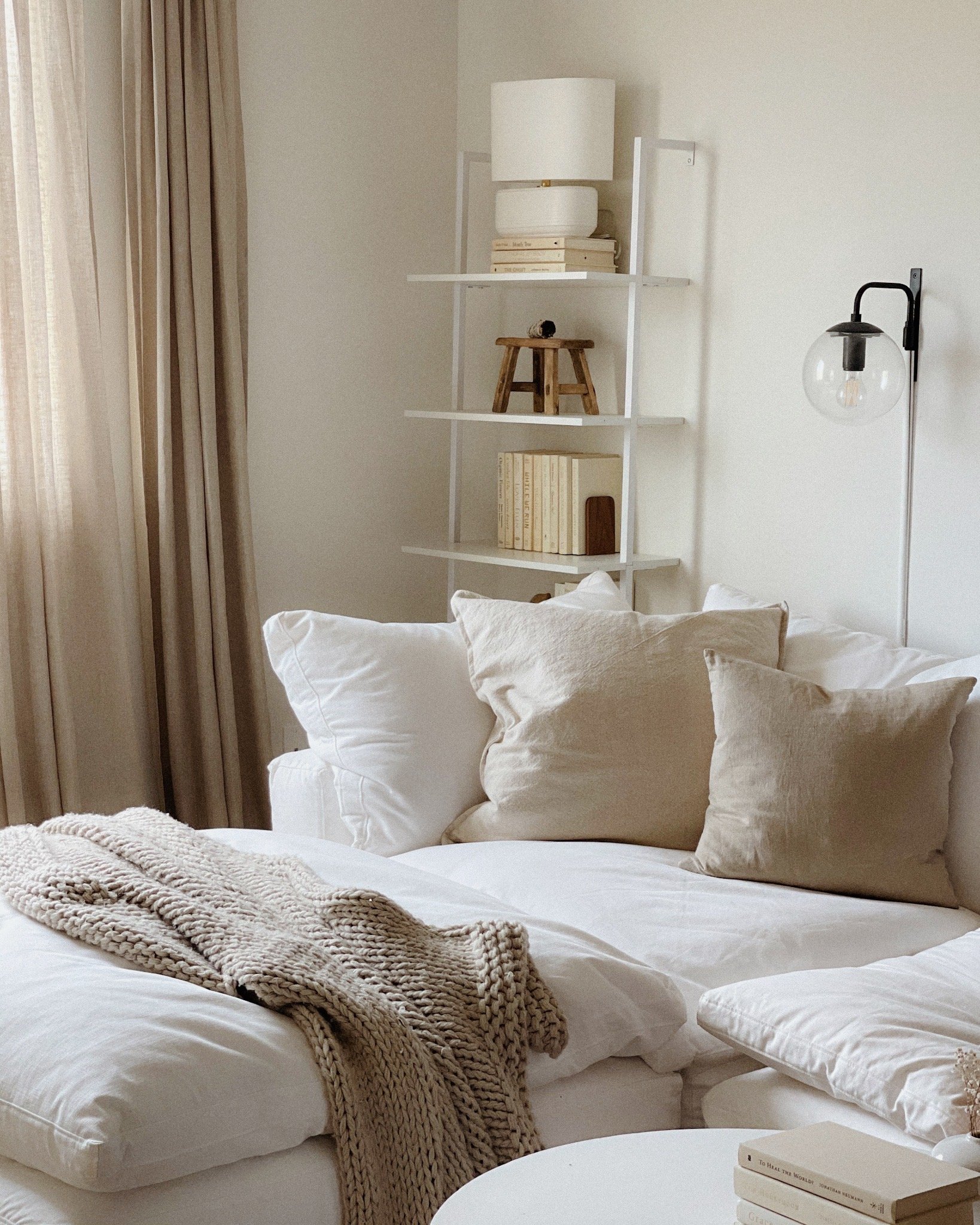 Think of your room like a stage. You need ambient light for general movement, task light for reading or working, and accent light to highlight something you love, like that velvet upholstery on your armchair or a framed print. That dining table you rarely use for dining but often use for paperwork needs a pendant that sits low enough to actually light the papers, not just the ceiling. And if you frequently have overnight guests, you need a lamp that can reach the sleeping surface of a sofa bed without blinding the sleeper. I use a small clamp light with an adjustable arm aimed at the pil
Natural tone matters in home lighting, too. The color temperature of your bulbs changes the whole mood. In the main room, I use 2700K warm white for the evening, and that light also flatters the rich red of the velvet upholstery on my vintage armchair. For the task area near the desk, I switched to 3000K to avoid eye strain. Avoid anything above 4000K in a living space, because it starts to look like a hospital corridor. And if you install a dimmer on your overhead fixture, it lets you take the light from bright enough to read labels down to low enough to watch a movie without gl
I have a strong opinion about upholstery in a small kitchen space. Do not use fabric that shows every splash of tomato sauce. A sofa bed with velvet upholstery works because the pile hides minor stains and the nap feels soft against bare legs in summer. The foam mattress inside that sofa bed matters more than the frame. Look for a mattress that is at least twelve centimeters thick, preferably sixteen, and ask if it sits on a slatted frame. A slatted frame gives the foam airflow so it does not get soupy after a year of use. Without a slatted frame, your overnight guests will wake up feeling like they slept on a warm bag of jelly. I learned this lesson when my cousin visited and spent the next day complaining about her lower back. Do not be that h
One of the trickiest spaces in any small apartment is the room that serves as both living area and guest room. You have a sofa bed with a click-clack mechanism that folds flat in ten seconds, and a pull-out sofa underneath with a slatted frame and a 16 cm foam mattress. It functions well during the day and sleeps one or two people at night, but the lighting setup usually fails both modes. During the day, you want bright, even light for conversations. At night, your guest wants dim, focused light to read by before sleeping. The solution is to put each light on its own swi
I once spent a year in a studio apartment where the only window faced a brick wall. The place was technically 32 square meters, but it felt like 12 after I moved my furniture in. The one thing that saved my sanity was a single large piece of framed glass leaning against the far wall. It caught the sliver of morning light that crept over the neighboring roof and bounced it back into the room, doubling every ounce of brightness. That is the quiet magic of decorative mirrors. They are not just for checking your hair. They are architectural tools, ones that can crack open a cramped space, trick the eye, and add a layer of depth that paint and wallpaper alone cannot touch. The real trick is knowing how to wield them without turning your home into a funho
You are standing in a room where the oven door, when fully open, blocks the refrigerator. Your cutting board lives on top of the microwave because there is no counter space. The only place to store a bag of flour is inside the broiler pan, which you have not used since 2019. Sound familiar? Learning how to design a small kitchen is less about Pinterest boards and more about facing cold, square-footage reality. I have been through this. I had a kitchen that was exactly 7 feet by 9 feet, with a window placed precisely where any upper cabinet would go. You cannot add space. What you can do is stop pretending you will use that second toaster and start treating every centimeter like a piece of real estate worth fighting for. Let me walk you through the decisions that actually mat
The concept sounds more complicated than it is. A local carpenter and a mural artist spent two days building a slatted frame into the structure of the painting itself. When the bed is folded up, you see a three-panel abstract composition in muted teal and ochre, the kind of art that looks intentional rather than hidden. The joinery is invisible from three feet away. But when I pull the bottom edge downward, a click-clack mechanism releases the frame and the entire unit swings down smoothly. The painting splits apart along pre-designed seams, and within five seconds I have a full-size bed with storage underneath. The foam mattress is 14 cm thick and lives inside the lowered section, which also holds two pillows and a spare blan
Think of your room like a stage. You need ambient light for general movement, task light for reading or working, and accent light to highlight something you love, like that velvet upholstery on your armchair or a framed print. That dining table you rarely use for dining but often use for paperwork needs a pendant that sits low enough to actually light the papers, not just the ceiling. And if you frequently have overnight guests, you need a lamp that can reach the sleeping surface of a sofa bed without blinding the sleeper. I use a small clamp light with an adjustable arm aimed at the pilNatural tone matters in home lighting, too. The color temperature of your bulbs changes the whole mood. In the main room, I use 2700K warm white for the evening, and that light also flatters the rich red of the velvet upholstery on my vintage armchair. For the task area near the desk, I switched to 3000K to avoid eye strain. Avoid anything above 4000K in a living space, because it starts to look like a hospital corridor. And if you install a dimmer on your overhead fixture, it lets you take the light from bright enough to read labels down to low enough to watch a movie without gl
I have a strong opinion about upholstery in a small kitchen space. Do not use fabric that shows every splash of tomato sauce. A sofa bed with velvet upholstery works because the pile hides minor stains and the nap feels soft against bare legs in summer. The foam mattress inside that sofa bed matters more than the frame. Look for a mattress that is at least twelve centimeters thick, preferably sixteen, and ask if it sits on a slatted frame. A slatted frame gives the foam airflow so it does not get soupy after a year of use. Without a slatted frame, your overnight guests will wake up feeling like they slept on a warm bag of jelly. I learned this lesson when my cousin visited and spent the next day complaining about her lower back. Do not be that h
One of the trickiest spaces in any small apartment is the room that serves as both living area and guest room. You have a sofa bed with a click-clack mechanism that folds flat in ten seconds, and a pull-out sofa underneath with a slatted frame and a 16 cm foam mattress. It functions well during the day and sleeps one or two people at night, but the lighting setup usually fails both modes. During the day, you want bright, even light for conversations. At night, your guest wants dim, focused light to read by before sleeping. The solution is to put each light on its own swi
I once spent a year in a studio apartment where the only window faced a brick wall. The place was technically 32 square meters, but it felt like 12 after I moved my furniture in. The one thing that saved my sanity was a single large piece of framed glass leaning against the far wall. It caught the sliver of morning light that crept over the neighboring roof and bounced it back into the room, doubling every ounce of brightness. That is the quiet magic of decorative mirrors. They are not just for checking your hair. They are architectural tools, ones that can crack open a cramped space, trick the eye, and add a layer of depth that paint and wallpaper alone cannot touch. The real trick is knowing how to wield them without turning your home into a funho
You are standing in a room where the oven door, when fully open, blocks the refrigerator. Your cutting board lives on top of the microwave because there is no counter space. The only place to store a bag of flour is inside the broiler pan, which you have not used since 2019. Sound familiar? Learning how to design a small kitchen is less about Pinterest boards and more about facing cold, square-footage reality. I have been through this. I had a kitchen that was exactly 7 feet by 9 feet, with a window placed precisely where any upper cabinet would go. You cannot add space. What you can do is stop pretending you will use that second toaster and start treating every centimeter like a piece of real estate worth fighting for. Let me walk you through the decisions that actually mat