
One problem that rarely gets airtime is the clutter that accumulates on the kitchen table. If you have a small eat-in area, the table becomes a dumping ground for mail, keys, and grocery bags. So I made my table fold down from the wall. When it is up, I have room for two stools. When it is down, the whole wall is clear and the room feels bigger. That folded table also clears a path for the pull out sofa to become the primary lounging spot. The click clack mechanism on my sofa allows me to convert it into a deeper seat for daytime reading, which means the kitchen is never just a kitchen. It is a den, a dining room, and a guest suite all in
A friend of mine has a bed with storage underneath, which means she cannot hang anything low on the wall because the drawers bump the frame when opened. She solved it by hanging a single large piece in the center of the wall, high enough that the bed frame never touches it. The piece is a three-dimensional shadow box with dried botanicals inside. It floats above the headboard like a piece of jewelry. The space beneath it remains empty, which creates a breathing room effect. The foam mattress sits on a slatted frame that she can pull out for guests, and the wall art above remains undisturbed. The lesson is that wall art works best when it has space to breathe. Crowd the wall, and you crowd the mind. Leave a margin, and the room expa
My home library now holds about eight hundred books across three bookcases, plus the overflow in the daybed drawers. The sofa bed remains the centerpiece, its click-clack mechanism still smooth after two years of weekly use. I have learned that the secret to a multifunctional space is not in finding a single piece of furniture that does everything well. It is in layering solutions. The slatted frame supports the foam mattress. The storage ottoman hides the bedding. The velvet upholstery ties the aesthetic together. Each element solves a specific problem without compromising the overall look or comfort.
Start with the obvious enemy: lack of floor space. A common mistake is pushing all storage to eye level and ignoring the air above your head. Mount magnetic strips for knives on the backsplash, hang a pegboard for pots and ladles, and install a shallow shelf along the top of the window for spices. This frees up your countertops for actual work. But here is the real kicker that often gets overlooked: your dining zone and your sleeping zone can occupy the same footprint. A well chosen sofa bed with storage solves the overnight guest dilemma without stealing precious square footage. I installed a model with a slatted frame that pulls out flat, and underneath it I store two sets of sheets and a lightweight duvet. No more hunting for bedding in the coat clo
My final realization about home organization is that furniture is not permanent. You can swap out a foam mattress. You can recover a sofa in new velvet upholstery. You can upgrade from a standard pull-out to a click-clack mechanism. The goal is not to buy one thing and keep it forever. The goal is to build a system where your space works for how you actually live. That means a sofa that converts into a real bed, not a torture device. It means storage that is where you need it, not across the apartment. It means accepting that home organization in a small space is an ongoing conversation with your furniture, not a one-time decision. I still have to adjust things every few months. But I no longer wake up in a puddle of melted ice cr
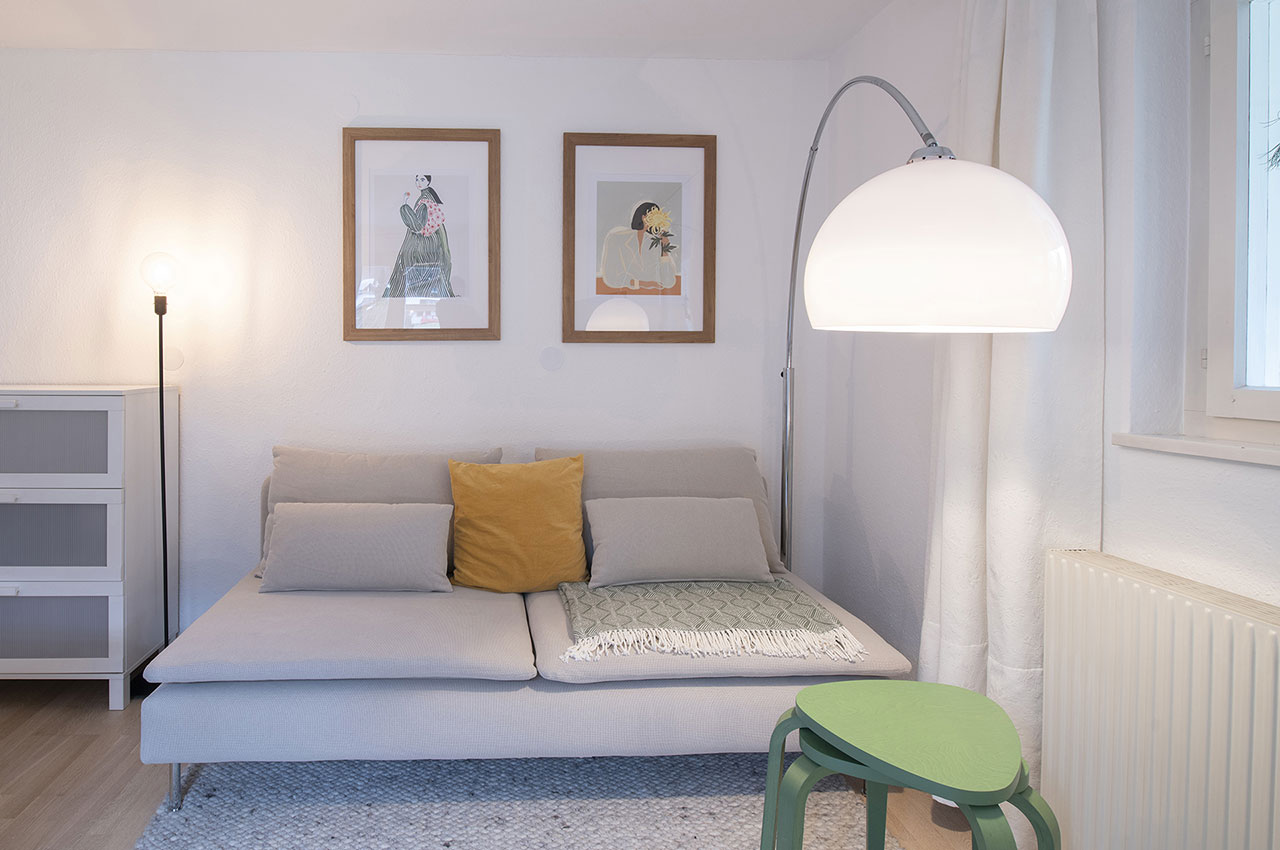 When I moved into my first apartment, the walls were a blank slate of off-white plaster, and I treated them like a waiting room. I hung nothing for six months because I was paralyzed by choice. Then I visited a friend whose 40-square-meter flat felt twice as large. The trick was not furniture. It was wall art that pulled your eye upward and outward, tricking the room into thinking it had more depth. I came home, bought a single large canvas with a muted abstract print, and leaned it against the wall instead of hanging it. That one piece changed the entire energy. Suddenly the cramped corner where my sofa bed sat felt deliberate, like a gallery corner. The lesson stuck with me. Wall art is not decoration. It is architecture for people who cannot afford an archit
A lot of people ask me how to pick wall art for a room that already feels stuffed with furniture. The answer is counterintuitive. You go bigger than you think you should. A tiny print on a large wall makes the furniture look bloated. A single oversized piece, even if it is just a stretched canvas with a solid color, pulls the eye away from the fact that your bed with storage sits only sixty centimeters from your desk. I use a diptych in my bedroom, two panels that span the length of the headboard. The bed itself is a low platform with a slatted frame and a 16 cm foam mattress. The art above it is the same width as the mattress, which creates a line of symmetry that quiets the room. The brain reads symmetry as spaciousness, even when you can barely open the closet d
A friend of mine has a bed with storage underneath, which means she cannot hang anything low on the wall because the drawers bump the frame when opened. She solved it by hanging a single large piece in the center of the wall, high enough that the bed frame never touches it. The piece is a three-dimensional shadow box with dried botanicals inside. It floats above the headboard like a piece of jewelry. The space beneath it remains empty, which creates a breathing room effect. The foam mattress sits on a slatted frame that she can pull out for guests, and the wall art above remains undisturbed. The lesson is that wall art works best when it has space to breathe. Crowd the wall, and you crowd the mind. Leave a margin, and the room expa
My home library now holds about eight hundred books across three bookcases, plus the overflow in the daybed drawers. The sofa bed remains the centerpiece, its click-clack mechanism still smooth after two years of weekly use. I have learned that the secret to a multifunctional space is not in finding a single piece of furniture that does everything well. It is in layering solutions. The slatted frame supports the foam mattress. The storage ottoman hides the bedding. The velvet upholstery ties the aesthetic together. Each element solves a specific problem without compromising the overall look or comfort.
Start with the obvious enemy: lack of floor space. A common mistake is pushing all storage to eye level and ignoring the air above your head. Mount magnetic strips for knives on the backsplash, hang a pegboard for pots and ladles, and install a shallow shelf along the top of the window for spices. This frees up your countertops for actual work. But here is the real kicker that often gets overlooked: your dining zone and your sleeping zone can occupy the same footprint. A well chosen sofa bed with storage solves the overnight guest dilemma without stealing precious square footage. I installed a model with a slatted frame that pulls out flat, and underneath it I store two sets of sheets and a lightweight duvet. No more hunting for bedding in the coat clo
My final realization about home organization is that furniture is not permanent. You can swap out a foam mattress. You can recover a sofa in new velvet upholstery. You can upgrade from a standard pull-out to a click-clack mechanism. The goal is not to buy one thing and keep it forever. The goal is to build a system where your space works for how you actually live. That means a sofa that converts into a real bed, not a torture device. It means storage that is where you need it, not across the apartment. It means accepting that home organization in a small space is an ongoing conversation with your furniture, not a one-time decision. I still have to adjust things every few months. But I no longer wake up in a puddle of melted ice cr
When I moved into my first apartment, the walls were a blank slate of off-white plaster, and I treated them like a waiting room. I hung nothing for six months because I was paralyzed by choice. Then I visited a friend whose 40-square-meter flat felt twice as large. The trick was not furniture. It was wall art that pulled your eye upward and outward, tricking the room into thinking it had more depth. I came home, bought a single large canvas with a muted abstract print, and leaned it against the wall instead of hanging it. That one piece changed the entire energy. Suddenly the cramped corner where my sofa bed sat felt deliberate, like a gallery corner. The lesson stuck with me. Wall art is not decoration. It is architecture for people who cannot afford an architA lot of people ask me how to pick wall art for a room that already feels stuffed with furniture. The answer is counterintuitive. You go bigger than you think you should. A tiny print on a large wall makes the furniture look bloated. A single oversized piece, even if it is just a stretched canvas with a solid color, pulls the eye away from the fact that your bed with storage sits only sixty centimeters from your desk. I use a diptych in my bedroom, two panels that span the length of the headboard. The bed itself is a low platform with a slatted frame and a 16 cm foam mattress. The art above it is the same width as the mattress, which creates a line of symmetry that quiets the room. The brain reads symmetry as spaciousness, even when you can barely open the closet d