
The conversion mechanism on my sofa bed is a click-clack mechanism. This means I press down on the backrest, it clicks, and the backrest drops flat to form the bed surface with the seat. No pulling, no lifting heavy mattresses, no fighting with a stuck leg mechanism. The click-clack mechanism is fast enough that guests can do it themselves without a tutorial. I have seen pull-out sofas where you need to lift the seat, yank a hidden handle, and then unfold a metal frame that pinches your fingers. The click-clack is simpler. It locks into place with a solid thud, and the slatted frame sits at a consistent height. The only downside is that the bed surface is slightly shorter than a standard twin, but for the average adult, it works fine as long as they are not a basketball player. For taller guests, I use a pull-out sofa in the living room instead. But for most people, this click-clack mechanism makes the attic design functional and f
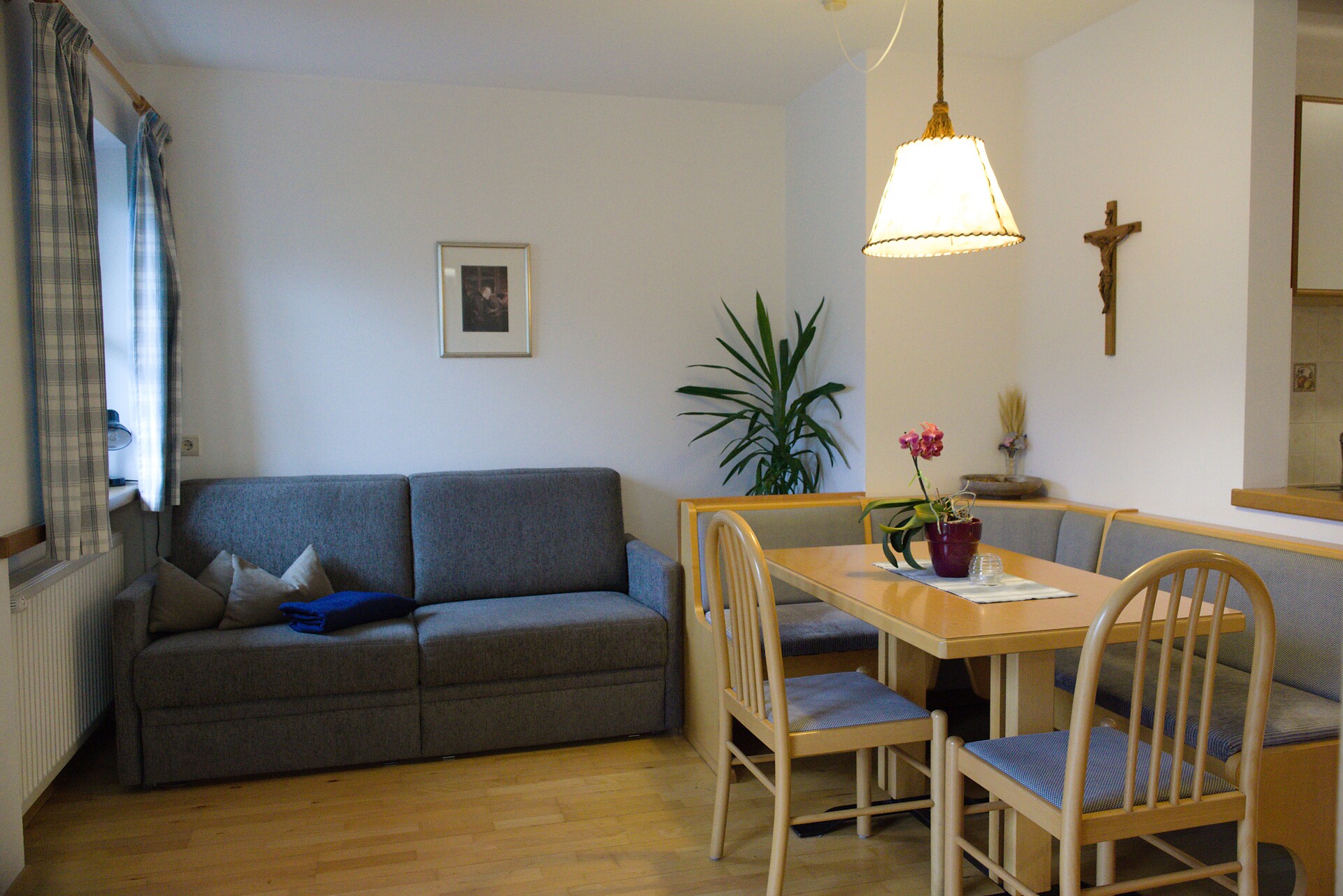 The mechanical specifics matter more than most people realize. Many click-clack mechanisms let you adjust the backrest to three different angles, giving you a lounging position without fully converting the sofa. That flexibility turns a single piece of furniture into three distinct zones. For small floor plans, this is gold. Your main seating area becomes a movie-watching spot, a napping zone, and an overnight bed all in the same footprint. I helped a friend outfit her 30 square meter studio. She had zero floor space for bedding. A wardrobe? Forget it. She chose a click-clack sofa with an integrated slatted frame, and the base pulls out to create a real sleeping surface with proper support. The top cushions become the mattress. No rolling off in the middle of the night. No extra storage unit needed for pillows. The whole setup collapses back into a neat, compact sofa in under sixty seco
Lighting in an attic is tricky because the ceiling slopes and you cannot put a regular lamp on a nightstand without it falling over. I screwed a dimmable wall sconce directly into the sloping wall above the headboard area. The sconce has an articulated arm so you can direct light for reading or switch it to bounce off the ceiling for ambient glow. No overhead fixture because the ceiling is too low in the center. I also put a small battery-powered LED puck light inside the drawer that holds the bedding, so guests can find their sheets at night without turning on the harsh overhead. These small details make the difference between a guest who sleeps well and a guest who texts you at 2 a.m. asking for a flashlight. The entire attic design hinges on anticipating every moment of the overnight experience, from arrival to morning cof
I learned about slatted frames the hard way when I bought a cheap solid base for a 16 cm foam mattress and woke up every morning with a sweaty back. The wood slats allow the foam to breathe. Without them, moisture gets trapped between the mattress and the platform, leading to mold in humid climates. In a rustic interior, where natural materials like wool blankets and linen curtains are common, that moisture is a real enemy. A slatted frame solves it quietly. You can build one yourself from pine slats and a center rail, or buy a ready made kit. The gap between each slat should be no more than 7 cm to support the foam. Too wide and the mattress bulges. Too narrow and you lose airflow. It is a small detail that makes the difference between a room that smells like a cabin and one that smells like a damp basem
You do not have to throw everything out. Sometimes refreshing your home without renovation means editing what you already own. Look at your current sofa. Is it the shape that bothers you, or the fabric? A slipcover is not a luxury item. A well-fitted, machine-washable cover in a color that lifts the room costs a fraction of a new couch. I did that with an IKEA Karlstad I had since college. The original beige was stained and tired. A charcoal linen cover cost forty euros. The transformation was so dramatic that my roommate asked if I bought a new sofa. Nope. Just fabric. The same principle applies to throw pillows. Overstuff them. Choose zipper covers in contrasting textures. A room starts feeling renewed when your eye has new shapes and colors to land on, even if the structure beneath stays the s
Finally, think about your actual posture. Do you sit upright to read, or do you collapse into a heap with your legs tucked under you? A high back with firm cushions works for upright sitting. A low back with soft cushions works for lounging. But most people switch between both depending on the time of day. Look for a sofa with removable cushions. You can flip them, replace them, or add a firmer foam insert later. A sofa with a 16 cm foam mattress on a slatted frame is actually more versatile than a traditional cushion because you can sit on it stiffly or sleep on it flat. The best living room sofa is rarely the prettiest one. It is the one that lets you eat, sleep, work, and argue without getting in the way. After that, you can always add a throw pil
The mechanical specifics matter more than most people realize. Many click-clack mechanisms let you adjust the backrest to three different angles, giving you a lounging position without fully converting the sofa. That flexibility turns a single piece of furniture into three distinct zones. For small floor plans, this is gold. Your main seating area becomes a movie-watching spot, a napping zone, and an overnight bed all in the same footprint. I helped a friend outfit her 30 square meter studio. She had zero floor space for bedding. A wardrobe? Forget it. She chose a click-clack sofa with an integrated slatted frame, and the base pulls out to create a real sleeping surface with proper support. The top cushions become the mattress. No rolling off in the middle of the night. No extra storage unit needed for pillows. The whole setup collapses back into a neat, compact sofa in under sixty secoLighting in an attic is tricky because the ceiling slopes and you cannot put a regular lamp on a nightstand without it falling over. I screwed a dimmable wall sconce directly into the sloping wall above the headboard area. The sconce has an articulated arm so you can direct light for reading or switch it to bounce off the ceiling for ambient glow. No overhead fixture because the ceiling is too low in the center. I also put a small battery-powered LED puck light inside the drawer that holds the bedding, so guests can find their sheets at night without turning on the harsh overhead. These small details make the difference between a guest who sleeps well and a guest who texts you at 2 a.m. asking for a flashlight. The entire attic design hinges on anticipating every moment of the overnight experience, from arrival to morning cof
I learned about slatted frames the hard way when I bought a cheap solid base for a 16 cm foam mattress and woke up every morning with a sweaty back. The wood slats allow the foam to breathe. Without them, moisture gets trapped between the mattress and the platform, leading to mold in humid climates. In a rustic interior, where natural materials like wool blankets and linen curtains are common, that moisture is a real enemy. A slatted frame solves it quietly. You can build one yourself from pine slats and a center rail, or buy a ready made kit. The gap between each slat should be no more than 7 cm to support the foam. Too wide and the mattress bulges. Too narrow and you lose airflow. It is a small detail that makes the difference between a room that smells like a cabin and one that smells like a damp basem
You do not have to throw everything out. Sometimes refreshing your home without renovation means editing what you already own. Look at your current sofa. Is it the shape that bothers you, or the fabric? A slipcover is not a luxury item. A well-fitted, machine-washable cover in a color that lifts the room costs a fraction of a new couch. I did that with an IKEA Karlstad I had since college. The original beige was stained and tired. A charcoal linen cover cost forty euros. The transformation was so dramatic that my roommate asked if I bought a new sofa. Nope. Just fabric. The same principle applies to throw pillows. Overstuff them. Choose zipper covers in contrasting textures. A room starts feeling renewed when your eye has new shapes and colors to land on, even if the structure beneath stays the s
Finally, think about your actual posture. Do you sit upright to read, or do you collapse into a heap with your legs tucked under you? A high back with firm cushions works for upright sitting. A low back with soft cushions works for lounging. But most people switch between both depending on the time of day. Look for a sofa with removable cushions. You can flip them, replace them, or add a firmer foam insert later. A sofa with a 16 cm foam mattress on a slatted frame is actually more versatile than a traditional cushion because you can sit on it stiffly or sleep on it flat. The best living room sofa is rarely the prettiest one. It is the one that lets you eat, sleep, work, and argue without getting in the way. After that, you can always add a throw pil